Pavers vs. Concrete: Which Is Right for Your Patio or Driveway?
Pavers vs. Concrete: Which Is Right for Your Patio or Driveway?
When it's time for a new patio or driveway, most homeowners land on the same question. Should I go with pavers or concrete? Both are solid choices, and both can look great. They just win in different areas. Pavers offer flexibility and easy repairs. Concrete offers a clean, seamless look at a lower upfront cost. The right pick depends on your budget, your style, and how you want the surface to age. New Jersey adds one more thing to weigh, since freeze-thaw winters test any outdoor surface. How each option handles that movement matters for the long haul. In this guide, we'll compare pavers and concrete on the things that actually matter, including cost, durability, looks, and repairs. We won't tell you one is always better, because that's not true. Instead, you'll see where each one shines, so you can match the surface to your home and decide with confidence.
Cost and value
Concrete usually wins on upfront cost. A poured slab generally costs less to install than a paver surface of the same size, since pavers take more labor to set piece by piece. That makes concrete attractive when the budget is tight.
Pavers cost more at the start, but they can add value through looks and longevity, and they're easy to repair without redoing the whole surface. So the real question is short-term versus long-term. If you want the lowest price now, concrete leads. If you're thinking about resale appeal and the cost of future repairs, pavers can pay off. Both add usable, attractive space to a home. The right value answer depends on how long you plan to stay and what matters more to you, price today or flexibility later.
Durability in New Jersey winters
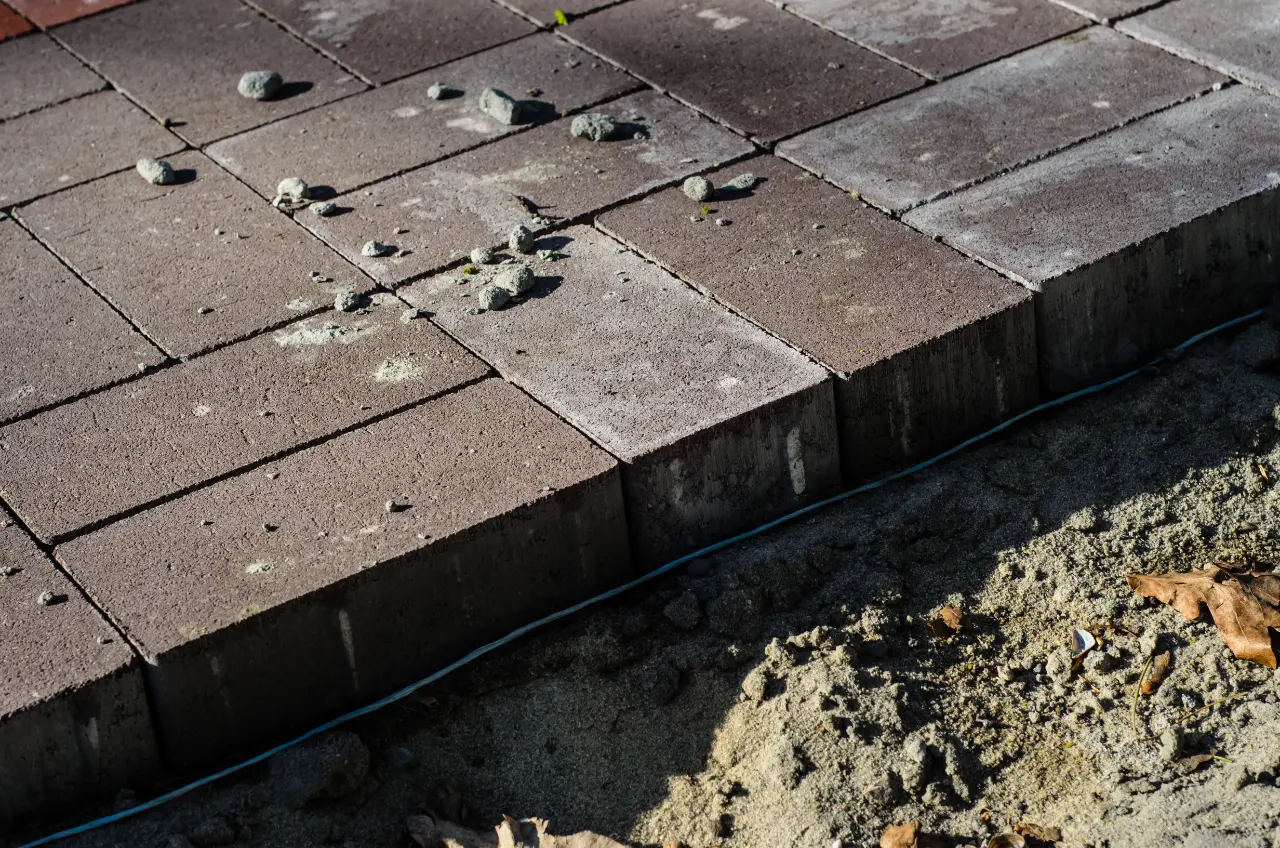
This is where New Jersey's climate earns a vote. Both surfaces can last for decades when they're installed right, but they fail differently. Concrete is one solid slab, so when freeze-thaw movement or a weak base causes a crack, that crack stays and can spread. Pavers are individual units set on a flexible base, so they move with the ground instead of cracking across the whole surface.
If one paver gets damaged, you replace that paver. With both, the base is everything. A deep, compacted base with good drainage is what survives New Jersey winters. A cheap install of either one will heave and settle. Done properly, pavers handle ground movement a little more gracefully, while concrete gives you a seamless surface with no joints to maintain.
Looks and maintenance
Style is personal, so this comes down to taste. Concrete gives a clean, modern, seamless look, and stamped concrete can mimic stone, brick, or pavers for more character. It's low maintenance, though it can be sealed to resist stains and salt.
Pavers offer more variety in color, shape, and pattern, and they create a high-end, textured look that many homeowners love. Maintenance differs too. Concrete is mostly wipe-and-go, while pavers may need occasional joint sand and the rare reset of a shifted piece. On the flip side, pavers hide wear better and stay attractive longer between touch-ups. If you want a sleek, uniform surface, concrete fits. If you want texture, color, and pattern, pavers give you more to work with.
Repairs and the long-term picture
Repairs are where pavers really separate themselves. If a section settles, stains, or cracks, you lift the affected pavers and reset or replace just those. The fix blends in, and you're not staring at a patch.
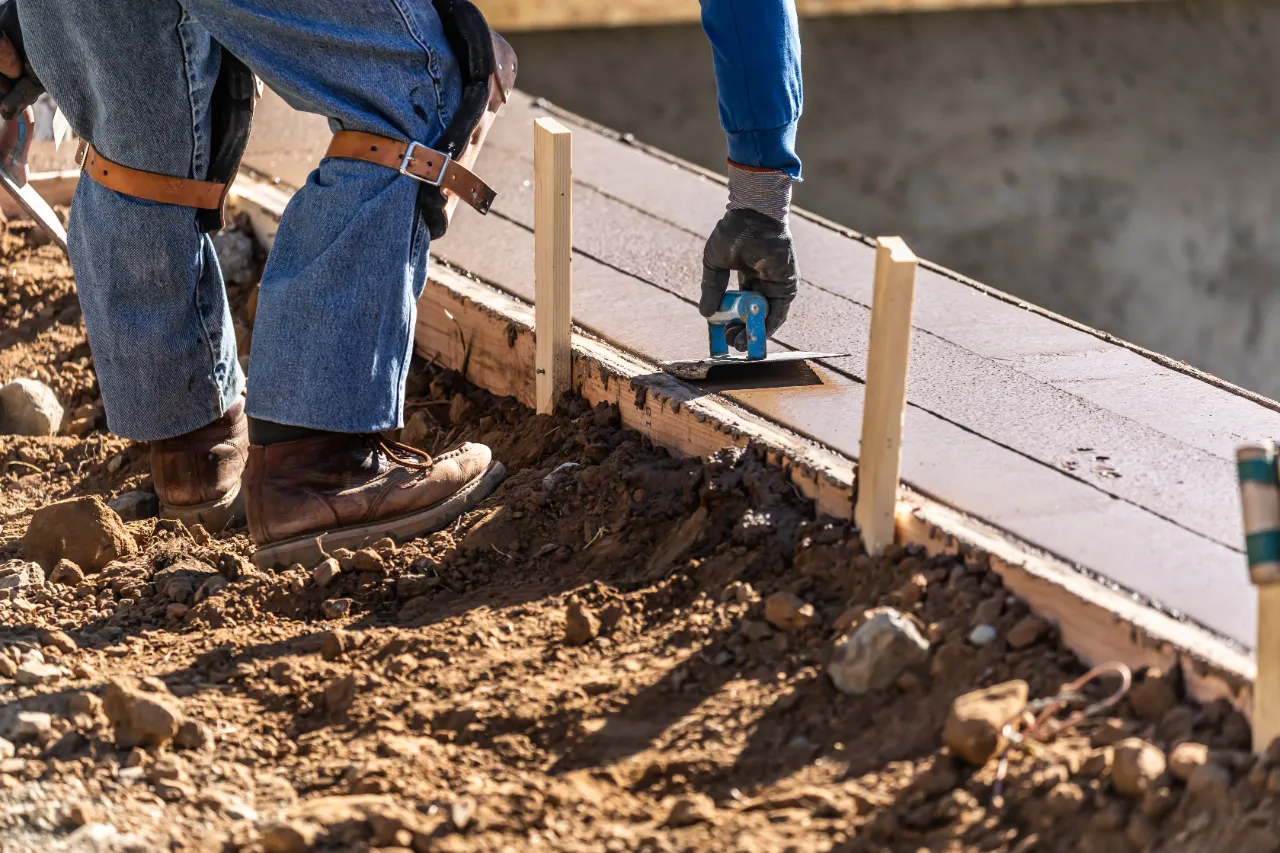
Concrete is harder to repair invisibly, since a patch or a new section rarely matches the original color and finish. For bigger concrete damage, replacement is often the cleaner option. That said, concrete that's poured well, with the right base, joints, and curing, may never need much beyond sealing. So the long-term picture is a trade-off. Pavers cost more upfront but are simpler to repair over the years. Concrete costs less to start and can be nearly maintenance-free if it's done right. Match that to how you want to live with the surface.
Pavers vs. Concrete FAQ
Concrete is usually cheaper to install upfront, since pavers take more labor. Pavers can pay off later through easy repairs and added curb appeal.
Both last decades when installed on a proper base. Pavers flex with ground movement, while concrete can crack, but a seamless slab done right is also very durable.
Pavers don't crack across the whole surface the way a slab can. If one paver is damaged, you replace just that piece instead of patching a large area.
It can be. Stamped concrete gives a paver or stone look at a lower cost than real pavers, with the seamless, low-maintenance feel of concrete.
Both work for driveways. The right pick depends on budget, looks, and how you want to handle future repairs. Either needs a deep, compacted base to last.